Pages

Thursday, June 16, 2011

Recommended Microbiology Websites


A very good picture collection for microbiology.


A very good mycology silibus based for study.


Another good material for study


Staphylococcus aureus Bacteria colonies on DNase test agar. Note clear zones around growth.
Staphylococcus on DNase agar

Streptococcus pyogenes Bacteria culture showing B-hemolytic zones around the colonies.
B hemlytic streptococci

Close-up of Mycoplasma Bacteria colonies on agar showing fried-egg morphology.
Mycoplasma fried egg appearance on mycoplasma agar

Mucoid colony of Klebsiella pneumoniae Bacteria on an agar culture.
gummy wet klebsiella colony

E. coli culture. Blue colonies are infected with phages with the galactose gene.
E.coli colony

Escherichia coli Bacteria colonies growing on MacConkey agar cultured from the human digestive tract.
E coli on Macconkey's agar

E. coli colonies on tryptone agar and on MacConkey agar.
E coli on tryptone and MacConkey agar


Candidiasis


Dermatophytes

Wednesday, June 15, 2011

Rhizopus


Penicilium


Cryptococcus neoformans


Friday, June 3, 2011

Lendiran faraj wanita


Assalamualaikum wbt...

Kawan2,ni sedikit penerangan ttg mani,mazi,wadi(yg kita bincang lepas usrah kak mus aritu).

Mani
Definisi:Cecair yang keluar ketika mencapai kemuncak syahwat ketika berjimak atau bermimpi hingga mengeluarkan mani.( berlaku pd lelaki atau perempuan)
Hukum air mani adalah suci(bukan najis,pakaian kena air mani,sah bawa solat)
Cara bersuci:Kikis air mani dr pakaian yang terkena,mandi wajib.(Ulama selisih pendapat ttg perlu basuh ke tak,yg terbaik,basuh if still basah dan kikis kalau dah kering)
Conclusion utk mani:Mani bukan najis,tapi perlu mandi wajib.

Mazi
Definisi:air yang keluar ketika ghairah.Definisi lengkap: air yang berwarna keputihan, jernih dan berlendir. Ia keluar disebabkan hasil permainan (alat sulit atau sentuhan lelaki dan wanita), ciuman, atau rangsangan seksual. Ia tidak memancut dan tidak menyebabkan keletihan. Kadangkala ia keluar tanpa disedari dan berlaku pada lelaki dan wanita.
Hukum:Najis
Cara bersuci:Tak perlu mandi wajib,memadai dengan membasuh kemaluan dan tempat yang terkena mazi,then berwudhuk.(de gak dalam hadis yg mengatakn cara bersihkan pd pakaian tu memadai merenjis air di tempat yang terkena)

WadiDefinisi:
air berwarna pekat, kekeruhan, tidak berbau dan keluar sejurus selepas kencing. Jika sentiasa keluar, kebiasaan ia berlaku ketika membawa (mengangkat) sesuatu yang berat.Hukum:Najis.
Cara bersuci:Sama seperti mensucikan mazi.
*Cara bersihkan wadi tak bape clear,x jumpa dalil cara sucikan,dalil sucikan mazi de r.Yg sy terbaca kat internet,penulis combine cara sucikan mazi dan wadi,so maybe cara yg sama gak.Sbb masa bincang hari tu kita konpius kena wudhuk ke tak kan...Utk selamat,wudhuk r,he2...

Thursday, June 2, 2011

Blood Pressure - Things to Know


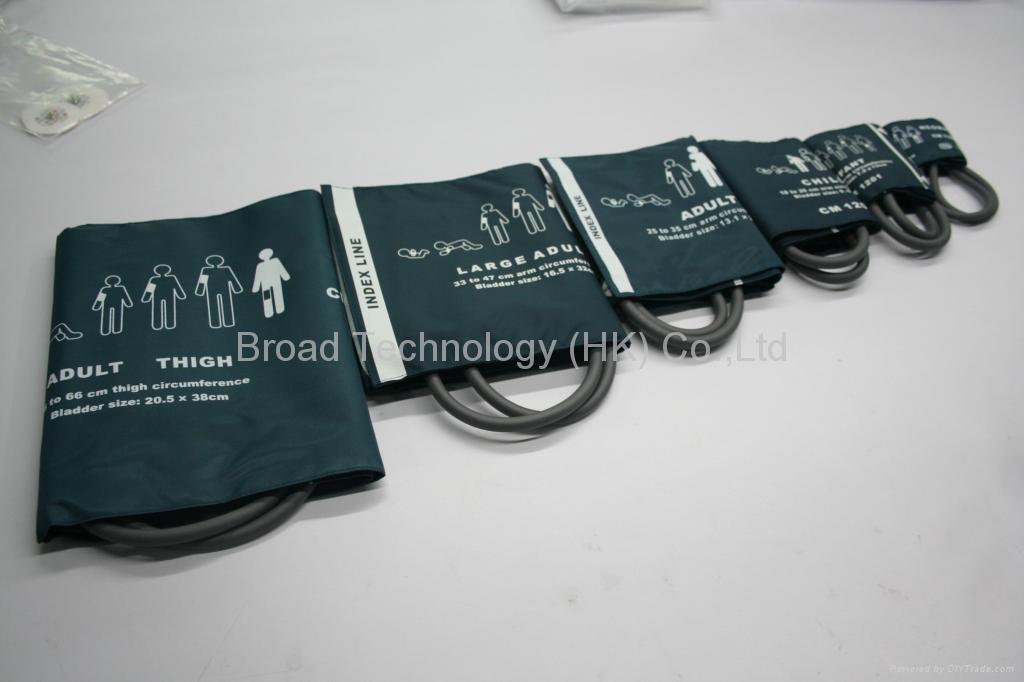
Do you ever wonder what is the size of the cuffs used in clinics and wards?
Have you ever wondered whether you used the right cuff for the right age ?

Well, here it is.

It is basically sold in four sizes.
The ones that we usually get in clinics for adults are 20 inches long, not wide.

We must aware that wrong size of cuff could lead to misinterpretation of the blood pressure values.

Hence, the right cuff must be used according to suitable age.


    General Practice, Multicuff, Blood Pressure Cuff Kit - Latex Free
  • Cuff Size: Adult 10.28 to 16.1 inches 
  • Cuff Size: Child 7.48 to 10.71 inches 
  • Cuff Size: Large Adult 13.5 to 20.04 inches

         Pediatric, Multicuff, Blood Pressure Cuff Kit
  • Cuff Size: Newborn 3.94 to 5.59 inches 
  • Cuff Size: Infant 5.31 to 7.68 inches 
  • Cuff Size: Child 7.48 to 10.71 inches 


Next, the measurement of blood pressure.


How to secure the cuff
  • Make sure that the cuff is covering 2/3rd of the upper arm.
  • Make sure that the cuff is tight allowing only one finger to pass through under cuff.
  • Make sure that the cuff is at the level of the heart.

Important steps during clinical examination:
  • Secure the cuff at 2/3rd of upper arm
  • Palpate the pulse with your left hand, raise the pressure above systolic level to make pulse disappear. Take note of the pressure where the pulse disappear
  • Palpate the brachial artery pulse which is medial to biceps tendon
  • Put the diaphragm of stethoscope under the medial aspect of the cuff 
  • Raise the pressure above  noted systolic level 
  • Release the pressure slowly 
  • Listen to the first Korotkoff sound that appears which indicating the systolic pressure of the patient
  • As the sound muffled and disappear , note that this muffling sound is the diastolic pressure level
5 Phases of Korotkoff's sound
  • Phase 1: First appearance of the sound marking the systolic pressure
  • Phase 2 and 3: increasingly loud sounds
  • Phase 4 : abrupt muffling of the sounds
  • Phase 5 : disappearing of the sounds
*Phase 5 provides better measure of diastolic pressure than phase 4,not only because it corresponds more closely with the directly measured diastolic pressure , but also because its identification is less subjective.
source: Hutchinson's Clinical Methods


Blood Pressure Measurement For Dummies


Download link : here.


*Note : Also important as viva questions especially in Pediatric department.

Wednesday, June 1, 2011

Clinical Examination in Children


Pediatric Measurements


Lymph Node Examination


General Examination


Abdomen Examination


Examination of Lungs and respiration


Pediatric Heart Examination


Musculoskeletal examination


Sense, Gait and Meningeal Signs 


Refresh your browser for each video. 
Try to buffer one video at a time.


These video contents  are essential for clinical postings.

 
Copyright (c) 2010 Medik Bloglist !. Design by WPThemes Expert

Blogger Templates and RegistryBooster.